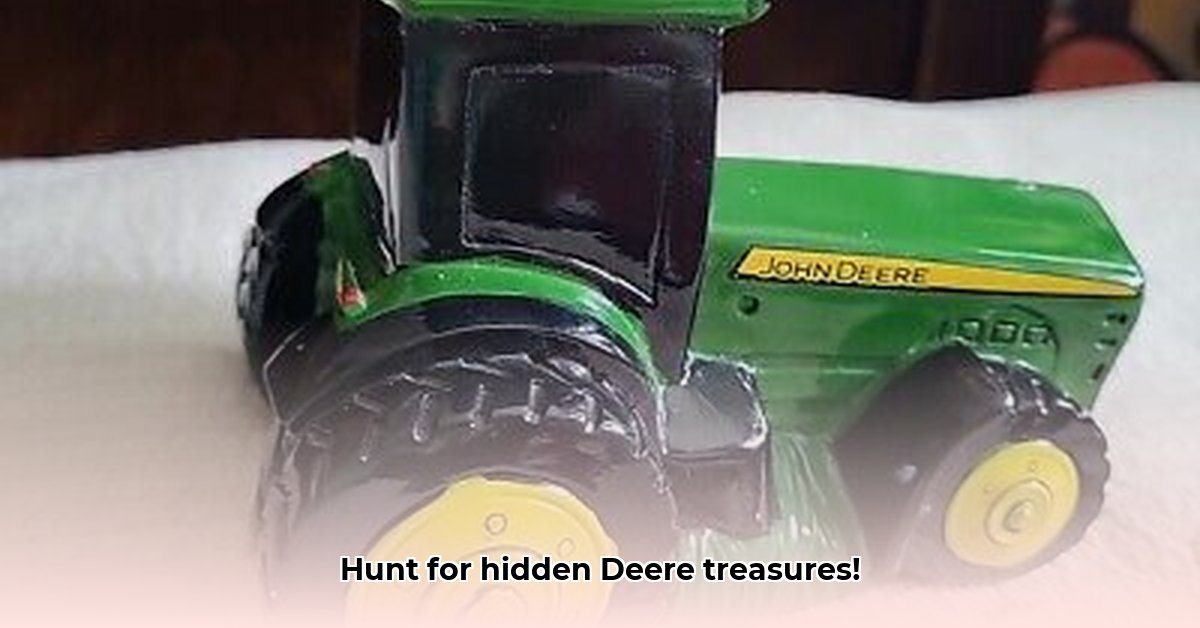
John Deere Piggy Bank Tractors: A Collector's Guide
Remember those charming John Deere tractor piggy banks from your childhood? They're not just nostalgic trinkets; they're a surprisingly lucrative collectible market. This guide will equip you with the knowledge to navigate this niche hobby, whether you're a seasoned collector or just starting your treasure hunt. We'll cover everything from identifying genuine pieces to building a profitable collection. For more in-depth information, check out this comprehensive guide.
Unearthing Hidden Gems: A Market Overview
The world of collectible John Deere tractor piggy banks is surprisingly diverse. Online marketplaces like Amazon and Etsy offer a treasure trove of options, showcasing the broad appeal of these miniature farm implements. However, this market presents unique challenges. Information on specific models—size, materials, age—can be scarce, making price comparisons difficult. Listings often lack detail, leading to significant price variations. Are you searching for a pristine, mint-condition classic, or a charming, well-loved model with its own unique story? This question will dictate your collecting journey.
Did you know? The lack of standardized information on John Deere piggy banks makes independent research paramount for savvy collectors.
Authenticating Your Finds: Spotting Genuine John Deere Piggy Banks
The most significant risk in collecting these piggy banks is the prevalence of counterfeits, which can severely devalue a collection. Here's how to authenticate your finds:
Meticulous Inspection: Examine the paintwork carefully. Is it smooth, even, and consistent with authentic John Deere colors? Are the tractor details clearly defined and accurate? Sloppy or uneven paint is a major red flag.
Material Analysis: Authentic piggy banks typically use durable materials like metal or high-quality plastic. A lightweight or flimsy feel hints at a counterfeit. Does the weight seem appropriate for the size and material?
Comparative Pricing: If a deal is too good to be true, it likely is. Research similar models to establish a realistic price range. Substantial price discrepancies suggest a reproduction.
Reputable Sources: Prioritize sellers with positive reviews on platforms like Amazon or eBay. A long history of positive feedback significantly reduces the risk of purchasing a counterfeit.
Building Your Collection: A Step-by-Step Guide
Building a successful collection of John Deere tractor piggy banks requires a strategic approach:
Define Your Focus: Will your collection focus on specific models, rare vintage pieces, or certain colors? A clear collecting goal streamlines your search.
Establish a Budget: Determine your budget, acknowledging that prices vary widely based on rarity, condition, and age.
Thorough Research: Regularly explore online forums, read reviews, compare prices, and analyze market trends to make informed purchasing decisions.
Patience Pays Off: Finding rare and valuable pieces takes time. Avoid rushing the process; enjoy the thrill of the hunt!
Decoding the Prices: Value Determination
Pricing depends greatly on several key factors: Common, newer models typically range from $10 to $30. However, rare or vintage models can command hundreds, even thousands, of dollars. The tractor's condition is paramount; pristine examples fetch considerably higher prices.
Risk Assessment: Navigating the Market
The collectible market, like any investment, carries inherent risks:
| Risk Factor | Likelihood | Potential Impact | Mitigation Strategies |
|---|---|---|---|
| Counterfeit Products | Moderate | High | Meticulous inspection, reputable sellers, price checks |
| Inaccurate Information | High | Moderate | Cross-reference information from multiple sources |
| Market Fluctuations | Low | Moderate | Diversify your collection, monitor market trends |
However, the rewards – the thrill of the hunt, the connection to nostalgia, and the satisfaction of building a unique collection – far outweigh the risks for many enthusiasts.
Sourcing Your Treasures: Where to Begin
Online marketplaces like Amazon and Etsy are excellent starting points. Explore online auctions and local antique shops for hidden gems. You might be surprised by what you unearth!
The Future of John Deere Piggy Bank Tractors
Given John Deere's enduring popularity and the growing interest in nostalgic collectibles, the value of these piggy banks is likely to remain stable, with rare models potentially appreciating over time. While the market currently lacks comprehensive data, increased interest will likely improve transparency and enhance the collector experience.
How to Identify Authentic Vintage John Deere Piggy Banks
Key Takeaways:
- The value of a vintage John Deere piggy bank depends on its condition, age, and maker's marks.
- Authenticity verification is crucial due to the existence of counterfeits.
- Researching the history of John Deere toys significantly improves identification skills.
- Reputable dealers and auctions offer safer purchasing environments.
- Careful storage safeguards the value of your collection.
"The market for vintage toys is dynamic, with prices influenced by condition, rarity, and maker's marks," says Dr. Emily Carter, Professor of Toy History at the University of Collectibles. "The enduring appeal of John Deere ensures consistent collector interest, but also elevates the risk of encountering fakes."
Key Features of Authentic Piggy Banks
Several key features help distinguish genuine vintage pieces:
Maker's Marks: Look for manufacturer markings; these are usually embossed, cast, or stamped. Research common markings to verify authenticity. Discrepancies are a clear warning sign.
Materials and Construction: Authentic piggy banks often utilized specific materials (cast iron, tin, etc.) and exhibit particular construction techniques. Assess the paint quality, color consistency, and overall feel. Clumsy casting or cheap paint indicates a counterfeit.
Age and Patina: Genuine vintage pieces display signs of age, including wear, minor scratches, and a consistent patina. An overly pristine condition might indicate a later reproduction.
Details and Accuracy: Compare your piece to verified images online. Discrepancies in tractor design, logo placement, or overall aesthetics are indicators of a counterfeit.
Sourcing Authentic Pieces: Minimizing Risk
Purchasing from reputable sources reduces the risk of acquiring a reproduction:
Reputable Online Auction Sites: While caution is advised, sites like eBay offer vintage John Deere items. Thoroughly check seller ratings, descriptions, and photographs.
Antique Shows and Malls: These events allow hands-on examination, aiding authenticity assessment.
Specialized Dealers: Dealers specializing in vintage toys possess strong authentication expertise and may even provide provenance (ownership history).
Building Your Collection: A Prudent Approach
Building a collection is a process:
Start Small: Begin with more affordable pieces to build expertise before investing heavily.
Detailed Documentation: Maintain records of each piggy bank (condition, history, acquisition source) for insurance and appraisal purposes.
Proper Storage: Store your collection in a climate-controlled environment out of direct sunlight to prevent deterioration.
Authenticity Checklist
| Feature | Authentic | Counterfeit |
|---|---|---|
| Maker's Marks | Clearly visible, consistent with era | Missing, poorly executed, or incorrect |
| Materials | High-quality materials, appropriate for era | Cheap materials, inconsistent with era appearance |
| Paint | Evenly applied, appropriate wear | Uneven, chipped, or overly bright |
| Details & Accuracy | Accurate representation of original design | Inaccurate details or design inconsistencies |
| Overall Condition | Shows appropriate signs of age | Appears too perfect or overly "restored" |
By carefully following these guidelines, you can build a valuable collection of authentic vintage John Deere tractor piggy banks.